Determining your closet color scheme is the next step in the process of evaluating your favorite outfit. The color combination you determine is one of the elements necessary for creating a closet full of clothes that you love to wear. In the last post you determined colors you love to wear and in this post you will determine the best color combinations for you to create your overall closet color scheme.
In this post you will:
Review your best color combinations including the relative lightness and darkness of these colors
Evaluate color combinations in your favorite outfit
Compare your best color combination to that of your favorite outfit
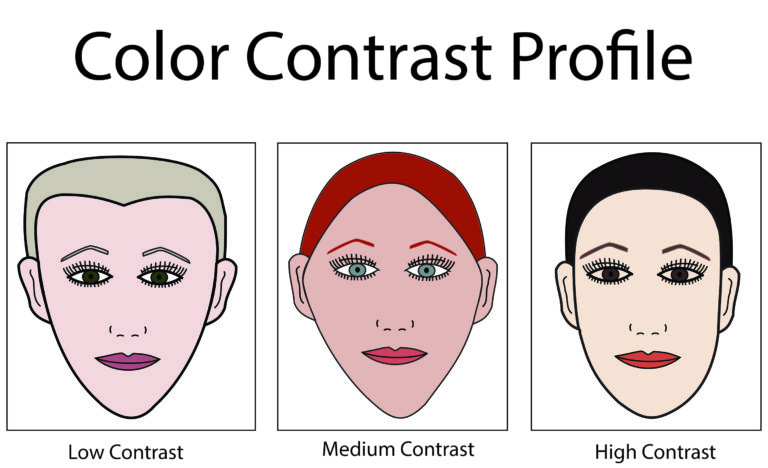
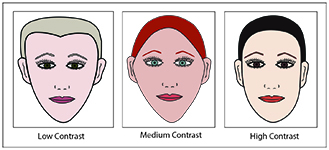
To determine your color combinations you first need to know your Color Contrast Profile. Do you have low contrast, medium contrast or high contrast? If you need to determine your Color Contrast Profile or to review your results go to The “Three Bears” Of Color Combinations — Color Combinations
By understanding your Color Contrast Profile you can determine which color combinations underwhelm you, overpower your or are just right for your coloring.
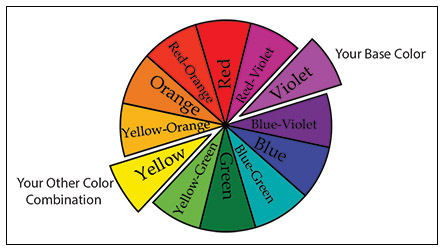
Color Theory Color Combinations
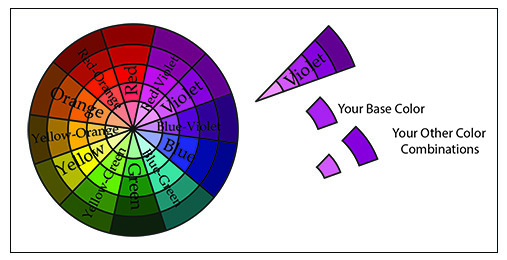
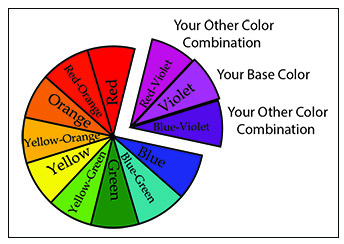
In color theory there are four different color combinations that go together well. These color combinations have low, medium or high contrast.
Monochromatic
In color theory there are four different color combinations that go together well. These color combinations have low, medium or high contrast.
Analogous
Monochromatic is great for people with low color contrast especially light skin, light eye, blondes. Too much color will overpower them and wash out their coloring.
Triadic
Triadic color combination is great for medium and high contrast people.
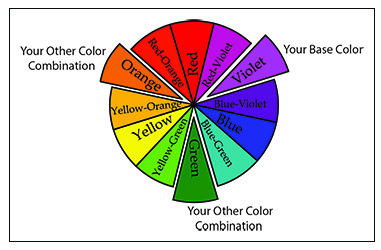
Complementary
Complementary color scheme is great for high contrast coloring.
Closet Color Scheme
Once you figure out which color combinations work best for you, you will have your closet color scheme. Whenever shopping, look for colors in your color scheme.
I have high contrast coloring therefore I’m high contrast. Monochromatic or analogous color combinations are underwhelming for me. I mostly stay in the triadic color combinations with a little complementary. I only use complementary when wearing prints because my complementary color is green and I’m not a big green person. However whenever I wear prints with this color combination I always get a lot of complements.
Relative Lightness And Darkness Of These Colors
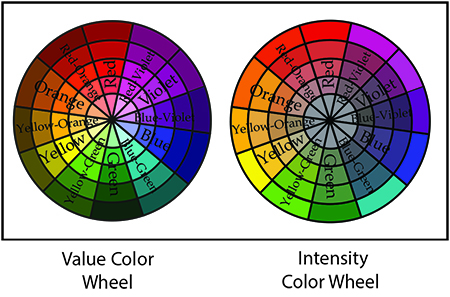
The next aspect of color combinations you need to consider is the relative lightness and darkness of your color combinations. Relative lightness or darkness of a color on the value color wheel simply means adding white or black to the color. For the intensity color wheel it’s how much of the complementary color is added. When the complementary color is added the color slowly goes to grey.
If you’re low contrast you want to stay on the same rim is your base color. However if you’re medium contrast you can go one or two rims above or below your base color. Finally if you’re high contrast like me, you can go 3 or 4 rims above or below your base color.
Does Your Favorite Outfit Match Your Closet Color Scheme?
Now the fun starts! It’s time to evaluate your favorite outfit to see where it lies in your closet color scheme. The first steps are:
Determine the dominant color
Find the supporting colors
Note the minor colors
Once you know these colors place them on the color wheel (click here to download a pdf of the three color wheels). Next determine which color combination they fall into.
Compare Your Best Colors Combinations and Your Favorite Outfit Colors
Does the color combination in your favorite outfit match your color contrast profile? Chances are it does.
If it doesn’t, look in your closet to see if you have an outfit that has color combinations that match your Color Contrast Profile. Try it on and compare it to your favorite outfit. Just look at the colors and nothing else. Which one do you like better? Which one makes you feel lighter?
If you don’t find the color combination in your closet, then go window shopping to look for color combinations that match your color profile. A good alternative to clothing stores is fabric stores. There are a ton of fabrics in all sorts of color schemes. Find the combination that makes you feel the lightest.
Create Your Closet Color Scheme Strategy
Now that you know your color scheme strategy that enhances the color of your skin, hair and eyes, go shopping to look for clothes that have your color combinations. When you have clothes that fall into your color strategy you can mix and match them. The benefit is you don’t need an exorbitant amount of clothes and you are able to wear an article of clothing in many different outfits. This brings down the cost per wear.
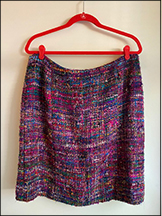
Personally I use both triadic and complimentary color schemes. My skirt is a perfect example. In it are all my base colors: red, pink, blue and blue/purple. It also has green for red/green complementary combinations. To create a little color contrast through lightness and darkness, a light gold is also included. As a result, I can wear solid blouses and jackets of my base colors. I will be able to wear it in many outfits without having to wear the same one. That’s how you make your clothes work for you.