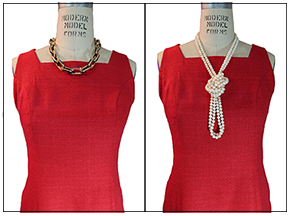
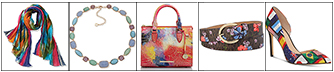
Understanding your best accessory color combination will take expressing yourself to the next level. This is true because through your accessories you can create color combinations. Your accessories themselves might have different combinations: note the color combinations in the photos.
The combination of solid color clothes and accessories can also create different color combinations: note how accessories create the Triadic Color Scheme and high contrast color scheme.
After you understand which color combination looks best on you, you can create whole outfits, including accessories, which tell the world who you are. This will allow you to further tap into your confidence and personal power.
In this post you will learn:
Which body element gives you clues to clothing and accessory color combination
About the two components of color combination
How to evaluate your accessories to determine if they match your best color combination
Accessory Color Combination -- Body Element
The body element that gives you clues to accessory color combination is Color of Skin, Hair and Eyes. I first wrote about color combinations in two different posts because color combinations have two components:
The combination of colors with your favorite colors
The relative lightness and darkness of these colors
You can go to these posts and get an in depth understanding of these components
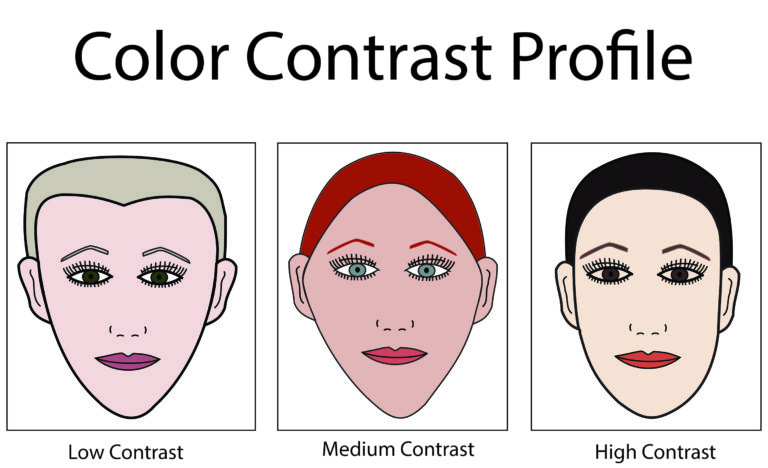
To determine your color combinations, you need to understand your Color Contrast Profile. This is the difference between the relative lightness and darkness of your skin, hair and eyes. If you have little difference you have low contrast. However, if you have a medium difference you have medium contrast. Finally, if you have a major difference you have high contrast. Before you go any further determine your Color Contrast Profile in the above posts.
Once you figure out your main colors you can figure out what colors you can combine with them which will enhance the color of your skin, hair and eyes.
To figure out the best color combinations for you, we will use color combinations used in color theory:
Monochromatic
Analogous
Triadic
Complimentary
Monochromatic Color Scheme
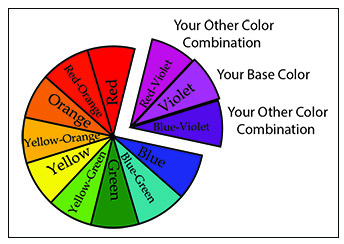
Monochromatic Color Scheme is for individuals with a Color Contrast Profile of low contrast. You can choose a color just below and above your main color.
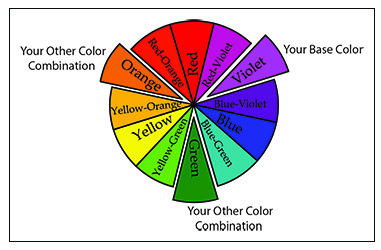
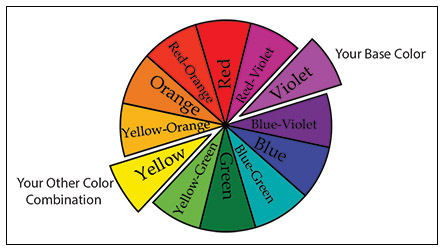
Analogous Color Scheme can be for both individuals with low contrast and medium contrast Color Contrast Profiles. You can choose a color on either side of your main color.
Triadic Color Scheme
Triadic Color Scheme can be for both individuals with medium contrast and high contrast Color Contrast Profiles. You can choose a color that’s four away from your main color on either side.
Complimentary Color Scheme
The Complementary Color Scheme is for individuals with a high contrast Color Contrast Profile. You can choose the color that’s exactly opposite from your main color.
Once you understand your color combinations, you can now determine the relative lightness and darkness of the colors.
Relative Lightness And Darkness Of Colors
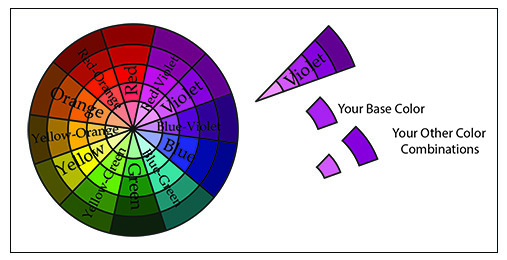
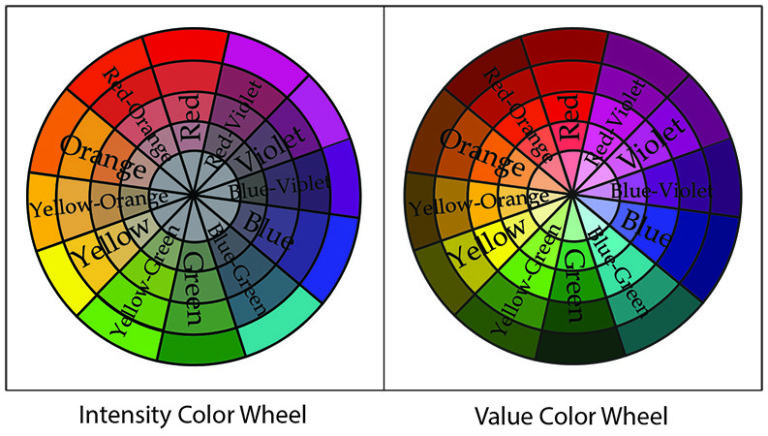
The relative lightness or darkness of a color depends on how much white, black or gray is added to a color. These two color wheels illustrate what happens when white, black or gray is added to a color. Notice that as the colors get closer to the center they become lighter and the further out they become darker.
To determine your relative lightness or darkness of color, you will look at your Color Contrast Profile again. If your Color Contrast Profile is low stay on the same rung when using Analogous Color Scheme. If you are using the Monochromatic Color Scheme, then move only one above or below your main color.
If your color contrast is medium, you can use colors that are one or two rungs above or below your main color.
If you have a Color Contrast Profile of high, then you have more choices. The clue here is to make sure you use both light and dark colors. It’s the contrast that will brighten up your coloring. I have a high contrast Color Contrast Profile and I feel more confident when I have the most contrast in colors.
Evaluate Your Accessories
The fun starts now, determining which of your accessories match your Color Contrast Profile. This means you’ll find out which of your accessories individually match your best accessory color combination. Also you’ll find out whether the color of the accessory, when added to your favorite outfit, creates a color scheme that matches your Color Contrast Profile.
I recommend just playing with different accessories and outfits. For example, put on a scarf that you haven’t put with a dress before while making sure the horizontal and vertical lines are placed correctly. Or put on different necklaces with blouses that highlight your best accessory color combination. You will be amazed at all the new outfits you have without going shopping.
How many new outfits did you come up with? Do you see how pairing different accessories and outfits creates a color scheme that enhances the color of your skin, hair and eyes? Tell us your findings in the comments below.
The next blog post will look at the scale of print and accessories. Scale is an important subject for accessories. The shape, placement of horizontal and vertical lines and color might be perfect, but if the scale is off, the accessory takes away from the outfit. The post is called Scale Of Accessories — Evaluate Your Accessories.