What Are The Colors of Your Skin, Hair and Eyes Telling You? Part 2
Colors in prints are just like the three bears. Some color combinations are overpowering (too hard). Others are blah (too soft) and a few are just right. How can you determine which print colors are just right for you? Keep reading.
In the last post you discovered your base and neutral colors. The next question to ask yourself is: What other colors can I match with these colors? This question is very important when considering colors in prints.
Why is this an important question? Because, if the print is too bold it could overpower you and that’s where the visual attention will go. Or if it is too subdued it doesn’t add value to your overall appearance.
Your goal is to have the colors in the print brighten your skin, hair and eyes.
Color combinations include two types of colors:
Other colors on the color wheel
The relative lightness and darkness of those colors
In this post you will learn:
Your color contrast profile
Basic color theory
Where your base color falls on which color wheel
What other colors on the color wheel brighten your skin, hair and eyes
In the next post you will learn about the second type of color combination: the relative lightness and darkness of other colors on the color wheel.
Color Contrast Profile
To determine your color combinations you first need to understand the color value contrast between your skin, hair and eyes. Color value is the relative brightness or darkness of a color.
The very basics of determining your contrast is this:
If your skin hair and eyes appear to have the same level of value (light skin, hair and eyes) then you have low contrast.
If your skin is slightly lighter or darker than you hair and eyes, then you have medium contrast.
If your skin is much lighter or darker than your hair and eyes then you have high contrast.
The first step is to determine the color value of your skin, hair and eyes. Ask yourself these questions and make a note (put them in a place where you can refer to them again):
Is my skin light, medium or dark?
Is my hair light, medium or dark?
Are my eyes are light, medium or dark?
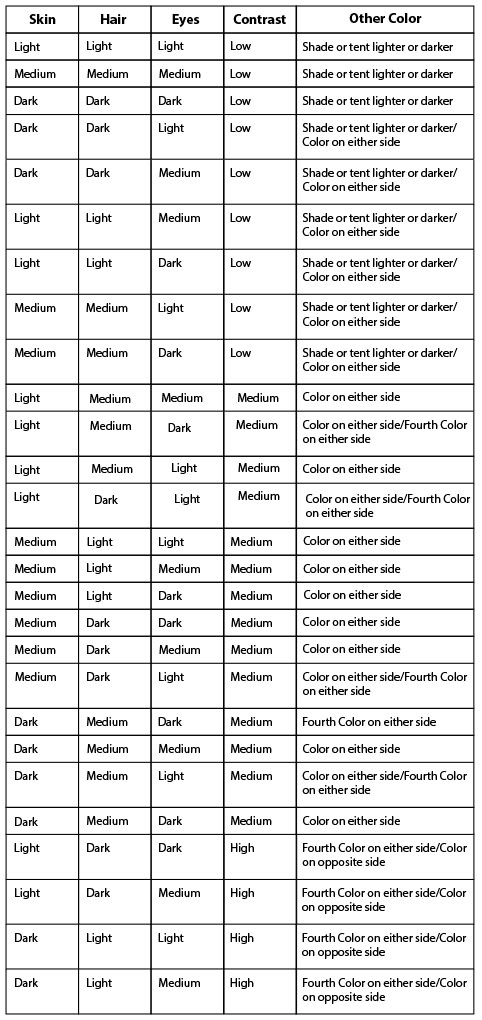
Using the chart below determine your color contrast.
I have light skin, dark hair and dark eyes; therefore, I have high contrast profile.
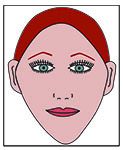
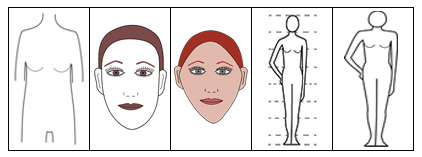
The color of the face image seen at the beginning of this post has medium skin, dark hair and medium eyes resulting in a medium contrast profile (seen below).
Color Theory
There isn’t enough room in this post to go into this subject in depth, but there is a lot of information about it on the internet. Also in my workbook Beauty Fashioned Simply — The Science of Dressing Impeccably there is a whole section on color theory in Chapter 5 Color of Skin, Hair and Eyes.
There isn’t enough room in this post to go into this subject in depth, but there is a lot of information about it on the internet. Also in my workbook Beauty Fashioned Simply — The Science of Dressing Impeccably there is a whole section on color theory in Chapter 5 Color of Skin, Hair and Eyes.
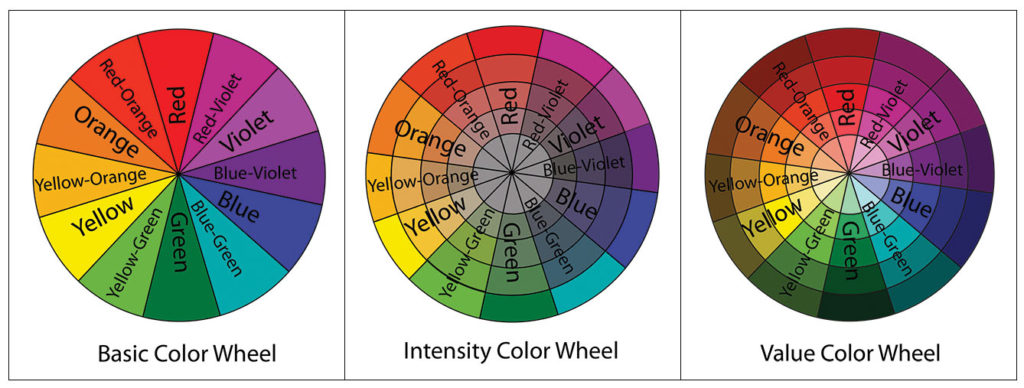
However, before we get into color combination you first need a basic understanding of the color wheel. There are three types of color wheels.
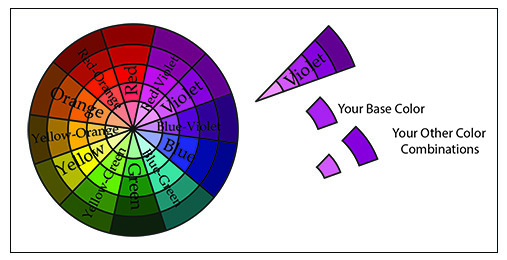
The Basic Color Wheel shows all the major colors in their purest form. The Intensity Color Wheel shows all the colors’ tones. Color tones have been grayed down by using the color on the opposite side of the color wheel. The Value Color Wheel shows colors’ tints and shades. Tints are the result of white being added to the color and shades are the result of black being added to the color.
The pure color from the Basic Color Wheel is the outer ring on the Intensity Color Wheel, while the pure color is the middle ring on the Value Color Wheel.
Your Base Color on the Color Wheel
Before you determine other colors you can wear, you must know which ring your base color lies in on the Intensity Color Wheel or Value Color Wheel.
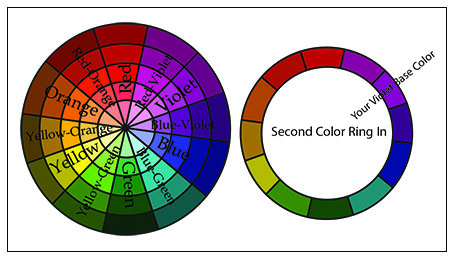
Take your base color and put it up to the color wheel below and determine which ring it lies in on a wheel. You might not find the exact color but find the best fit.
If your base color is not an exact match with the color wheels, stand back, squint, and allow your eyes to become unfocused; often times, the blended/softened view is easier to pigeon-whole than the straight-on view. In the end, just use your best judgement. Also ask a friend who is good with colors.
It might be easier for you to determine your color ring by printing out these color wheels.
Now you know where your base color lies on a color wheel. The additional colors you will determine below will be at the same ring. For example if your color is violet second ring in on the Value Color Wheel then all your other colors will be on the Value Color Wheel’s second ring.
Color Combination - Other Colors
When I talk about color combinations in this section I’m just talking about what other colors you can wear with your base color and/or neutral color.
The other colors you can wear totally depend on your color contrast. If the color contrast of your skin, hair and eyes is light then you should stick with colors on either side of your base color. In some cases just stick with your base color to keep the contrast low or matching with your natural contrast.
The more color contrast you have the further away from the base color you can go. When you have a high color contrast you can go to the opposite side of the color wheel. My base color is red, and I have a high color contrast; so I can wear the opposite side of the color wheel to red and that is green.
Find your color contrast in the table below:
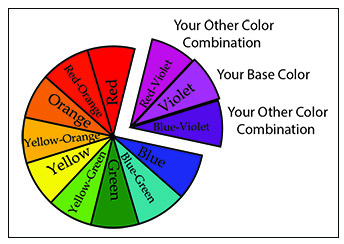
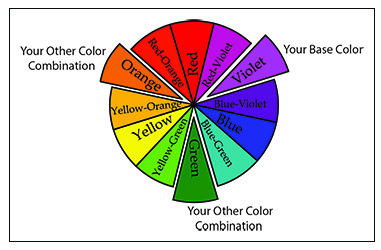
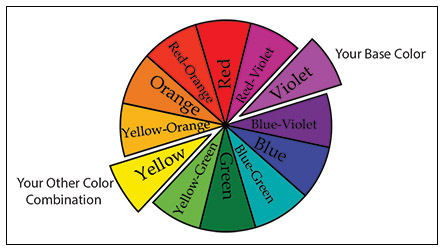
Using the color wheel these are examples of other color combinations:
Shade or tent lighter or darker
Color on either side
Fourth color on either side
Color on opposite side
Now you know what other colors are on your base color ring. What are your color combinations? Did you have an “ah ha” moment? Make comments below.
The next step is determining the relative lightness and darkness of those other colors. I will tackle that in the next blog post.